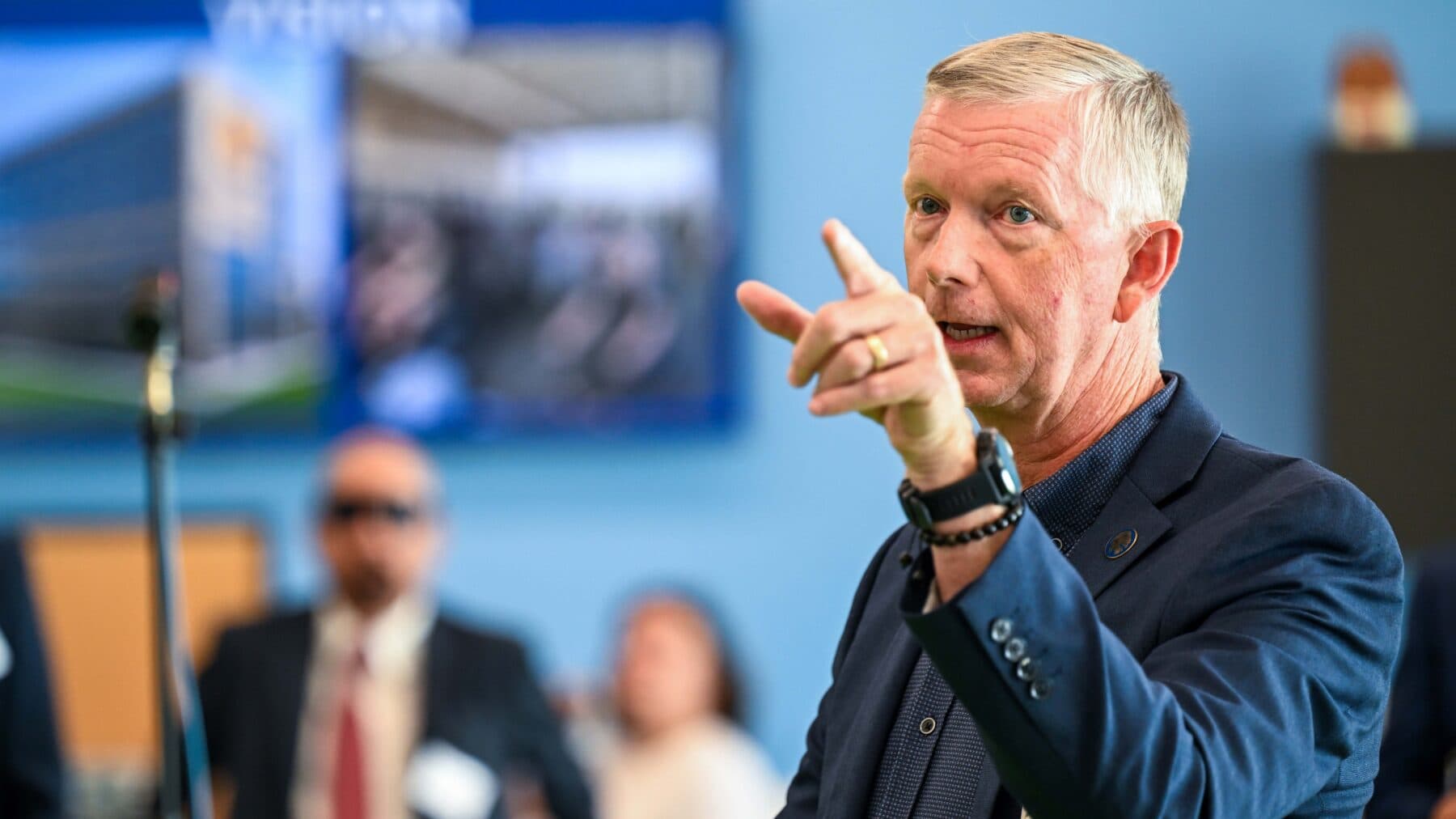
Dr. Michael Oldham
Assistant professor, Department of Health and Human Performance. Director of the ROARHP Lab. Leading the establishment of the Fire Data Consortium.
University profileSatori Defense / Fire Data Consortium
East Texas A&M leads · Satori supportsA university-led effort to connect research on firefighter health and performance. Satori’s MARC-MK technology supports the project. Satori does not lead it.
On September 10, 2026, East Texas A&M University published a news story, written by Patrick Harrison, about a university-led effort to connect firefighter health and performance research.
East Texas A&M University is leading the Fire Data Consortium, an effort to connect research on firefighter health and performance.
Satori’s MARC-MK technology supports the project by helping researchers prepare and bring datasets together.
Satori Defense supports the consortium and does not lead it.
Headline: ETAMU-Led Fire Data Consortium Uses AI to Improve Firefighter Health and Safety. Written by Patrick Harrison for East Texas A&M University.
Firefighters work in extreme heat, carry heavy equipment, keep irregular hours, and respond when someone else’s safety depends on their readiness. The university story starts there. Researchers at East Texas A&M are studying those demands and trying to turn scattered studies into information departments can use.
Dr. Michael Oldham, assistant professor in the Department of Health and Human Performance and director of the ROARHP Lab, is leading the establishment of the Fire Data Consortium. The university describes it as a multi-institutional collaboration. The aim is a secure, centralized repository where firefighter research data from universities, fire departments, and other organizations can eventually be combined and analyzed. The stated goal is to make firefighting safer.
ROARHP stands for Research Opportunities in Athletics, Recreation, Health, and Performance. It is a university lab. Faculty and students there use exercise-science tools to study movement, cardiovascular fitness, body composition, blood chemistry, and other parts of human performance. Work with first responders is aimed at occupational readiness and resilience. Satori Defense does not direct the lab, and Dr. Oldham is not a Satori employee.
The university reported that ROARHP researchers use wearable WHOOP monitors to look at heart rate, sleep, recovery, and physiological strain, including comparisons before and after departments change shift schedules. The consortium is how those researchers hope to compare compatible information across departments and locations. The monitors and the studies belong to the university’s research program.
We want to make sure that firefighters are able to walk off the job instead of limp off the job.
Lab and people pages published by the university: Dr. Michael Oldham, ROARHP Lab, and the Department of Health and Human Performance.
Satori’s role is specific. In the university story, Siena Carroll, co-founder and chief operating officer, is quoted as speaking for the company that provides the artificial intelligence technology supporting the project. That technology is MARC-MK.
East Texas A&M University reported that MARC-MK operates on premises at ETAMU in a secure, closed-loop environment.
The university said the system can help researchers clean, standardize, and combine datasets before conducting large-scale analyses.
The university also reported that the researchers remain in control of what the evidence means.
Carroll also told the university that the fire service does not have a shortage of data. It has a problem connecting and using it. That is the problem Satori is on this project to help with.
The fire service does not have a shortage of data. It has a problem connecting and using it.
AI does not replace ROARHP’s researchers or the consortium’s subject-matter experts. It gives them a more complete picture and the ability to work at a speed and scale that were not previously possible.
East Texas A&M University reported on September 10, 2026, that Dr. Michael Oldham said processing three months of wearable data manually once required five graduate assistants to spend approximately 200 hours organizing and preparing the information. The university reported that MARC-MK can accomplish comparable data-processing work in about 40 seconds.
That comparison is the university’s account of one data-preparation task. Satori does not publish it as a general performance guarantee.
The figures are approximately 200 hours of manual preparation by five graduate assistants, and about 40 seconds for comparable data-processing work with MARC-MK. Both numbers come from the university’s account of Dr. Oldham’s comparison. They are not a ranking, and they are not a promise about a different dataset.
East Texas A&M University reported that the Fire Data Consortium is supported by a $100,000 Research Enhancement Fund (REF) award from The Texas A&M University System. The university said the award provides one year to establish the consortium’s foundation, and that part of the funding will expand MARC-MK’s capabilities, support collaborative meetings, and provide administrative and graduate assistant support.
This is university research funding, not Satori Defense revenue.
It is about the technology, the AI. But what I think is paramount is that this is truly about serving the fire service industry. That is at the heart of this effort.
We are here to serve the first responder industry. We do that with really fancy tools of AI and exercise physiology equipment. But if we start with that servant heart first, that mentality, then the data is secondary.
Dr. Oldham leads the consortium for East Texas A&M. Siena Carroll speaks for Satori. The collaborators below are named in the university story. They are not Satori employees, and this page does not speak for their institutions.
Assistant professor, Department of Health and Human Performance. Director of the ROARHP Lab. Leading the establishment of the Fire Data Consortium.
University profileCo-founder and chief operating officer. Quoted by the university as describing the data-connecting problem, and as saying AI does not replace the researchers.
On the Satori homepageFounder and CEO. Navy SEAL veteran. The biography, and the service-disabled veteran-owned description of the company, live on the About page.
AboutAssociate professor in the Department of Kinesiology and Sport Management. The university story notes that her father was a firefighter.
“If we can provide data that allows administrators to allocate or acquire more funds for health and performance training, education, access—whatever it may be—then I am excited for that.”
Texas A&M UniversityChair of the departments of Biology and Human Performance. The university story describes him as a military veteran and former first responder.
“Ultimately, the goal is not simply to collect more data. It is to turn data into actionable information that can help firefighters remain healthy, effective and capable of serving their communities throughout longer careers.”
University of Texas Permian BasinInstructor, field experience coordinator, and a co-investigator named by East Texas A&M.
“I have described my personal and professional mission as ‘bringing first responders home to their families.’ FDC is the kind of broadly impactful project that can do just that.”
Tarleton State UniversityOn this project, MARC-MK is the system the university says runs on premises, in a closed loop, to help clean, standardize, and combine datasets.
The product page keeps the consortium as proof, not as the only use.
Read the MARC-MK pageETAMU-Led Fire Data Consortium Uses AI to Improve Firefighter Health and Safety. 2026-09-10. If this page and the university story ever diverge, the university story is the source for what the university said.
Open the university storyThis page restates the university story and Satori’s own description of its role.
It does not give leadership of the consortium to Satori Defense.
It does not add customers, rankings, contract vehicles, or revenue.
The preparation-time comparison is one university-reported task. It is not a promise about any other dataset.
Company facts · About · Homepage
Content reviewed 2026-09-24.
Dr. Michael Oldham, assistant professor in East Texas A&M University’s Department of Health and Human Performance and director of the university’s ROARHP Lab, is leading the establishment of the Fire Data Consortium. ROARHP stands for Research Opportunities in Athletics, Recreation, Health, and Performance. The lab is part of the university. Satori Defense provides supporting technology and does not lead the consortium.
East Texas A&M University is leading the Fire Data Consortium, an effort to connect research on firefighter health and performance. Satori’s MARC-MK technology supports the project by helping researchers prepare and bring datasets together. Satori Defense supports the consortium and does not lead it.
Siena Carroll told East Texas A&M University: “The fire service does not have a shortage of data. It has a problem connecting and using it.” She was describing the fire service data the consortium is meant to connect. Satori’s supporting job is preparation and connection, not leadership of the consortium.
East Texas A&M University reported on September 10, 2026, that Dr. Michael Oldham said processing three months of wearable data manually once required five graduate assistants to spend approximately 200 hours organizing and preparing the information. The university reported that MARC-MK can accomplish comparable data-processing work in about 40 seconds. That comparison is the university’s account of one data-preparation task. Satori does not publish it as a general performance guarantee.
East Texas A&M University reported that MARC-MK operates on premises at ETAMU in a secure, closed-loop environment. Satori’s About page says deployments are often in on-prem or controlled environments where data cannot simply be moved into third-party tools.
East Texas A&M University reported that the Fire Data Consortium is supported by a $100,000 Research Enhancement Fund (REF) award from The Texas A&M University System. The university said the award provides one year to establish the consortium’s foundation, and that part of the funding will expand MARC-MK’s capabilities, support collaborative meetings, and provide administrative and graduate assistant support. This is university research funding, not Satori Defense revenue.
Start with your questions. We’ll start by listening.
Email us at info@satoridefense.com.
Schedule a deployment consultation. We move at mission speed. Operational within 48 hours for most environments.