
Your RMP assumes a 6-minute response time. During a rail blockage at Station 34, it’s 10.2 minutes.
MARC-MK maps rail corridors crossing emergency response zones serving your facility, quantifies response time impact during blockages, and provides alternate route documentation ready for RMP and PSM compliance packages.
Your emergency response plan has an unvalidated assumption — and regulators are starting to notice.
Rail blockages and weather-driven risk are data sources your RMP and PSM documents don’t yet connect. MARC-MK closes that gap.
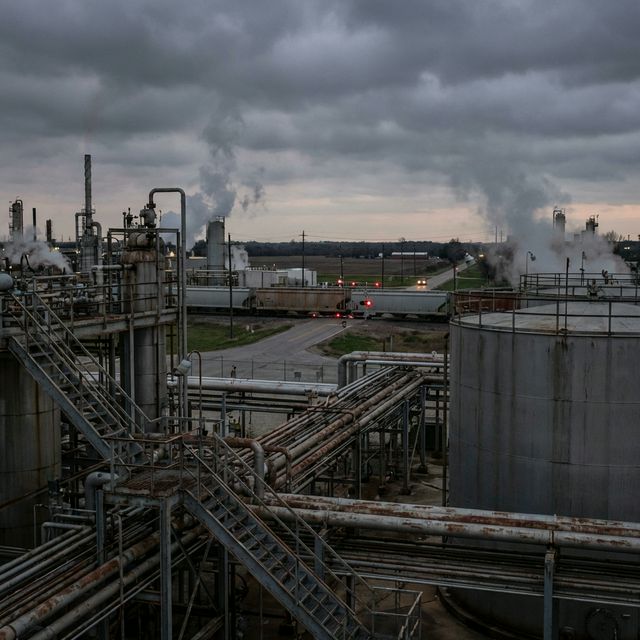
Rail blockages invalidate your response time assumptions.
Station 34 at 3701 Bellaire Blvd has 4 rail crossings in its response zone to your facility (BNSF + UP Angleton). Peak blockage: 2-4 PM. During a BNSF Galveston Sub blockage, Station 34 is delayed 4.2 minutes and Station 67 is delayed 2.8 minutes.
Your RMP likely assumes direct response corridors. MARC-MK provides scenario analysis data showing which rail blockages impact your facility, predicted frequency, and documented alternate routes for your compliance package.

Cold weather creates compound risk at the worst possible time.
When temperatures drop below 45°F, structure fires nearly double (1.9x). Cold fronts are predictable days in advance. For facilities with flare operations or steam systems, cold weather + increased fire activity = elevated risk window that your ERP should account for.
MARC-MK correlates NOAA forecasts with incident history to predict cold-weather risk windows before they happen. Your ERT can pre-position assets and your compliance team can document the weather-correlation analysis.
Compliance-ready intelligence that validates (or corrects) your emergency response assumptions.
Every deliverable is formatted for your RMP filing and ready for auditor review.

Your RMP states assumed response times. MARC-MK provides documented analysis showing how each major rail corridor blockage affects each fire station serving your facility, formatted for RMP Table 5 (Response Procedures) with full audit trail.
- Response time matrix: Station-to-facility times under normal and blocked conditions
- 25+ critical blockage scenarios with alternate route documentation
- Weather-correlated risk windows for seasonal ERP adjustments
- Audit-ready output: methodology, data sources, statistical summary for RMP filing
“Your assumed response time is 6 minutes. During a BNSF blockage, it’s 10.2 minutes. Here’s the documented scenario analysis.”
BNSF Galveston Sub — 2:30 PM Tuesday
How a blockage scenario plays out and why your RMP needs documented analysis.

Station 34 Response: +4.2 minutes. Station 67: +2.8 minutes. Station 7: +1.5 minutes.
The Scenario: BNSF Galveston Sub is blocked at 2:30 PM on a Tuesday. Your facility reports an incident requiring emergency response. Station 34 (3701 Bellaire) normally arrives in 6 minutes. During this blockage, Station 34 must detour via I-610 to Bellaire — now 10.2 minutes. Station 67 (Navigation Dr) adds 2.8 minutes. Station 7 (Westheimer) experiences a secondary impact of +1.5 minutes due to congestion.
Why Your RMP Needs This: Your current RMP likely assumes Station 34 arrives in 6 minutes under all conditions. Regulators reviewing your Emergency Response Plan will ask: “Have you validated this assumption against documented blockage scenarios?” MARC-MK provides that validation with frequency data, alternate routes, and documented response impact analysis ready for your compliance package.
The Output: This scenario is documented with methodology, data sources, and cross-validation with HFD Operations. Your audit-ready package includes 25+ scenarios like this, showing your facility has genuine emergency response analysis, not assumptions.
From raw data to compliance-ready intelligence in four layers.

Multi-Source Ingestion
Rail schedules, HFD dispatch, 311 complaints, NOAA weather, station records. Raw data fused into one layer.

Scenario Modeling
Response time calculations under every blockage permutation. Impact on your facility mapped for every scenario.

Facility Overlay
Your facility mapped against surrounding response infrastructure. Vulnerability analysis for every station.
Compliance Package
Documented scenarios, alternate routes, risk windows ready for RMP Table 5 and PSM annex filing.
Built on real Houston data. Verified. Production-ready.
Built by operators, not consultants.
Navy Veteran Leadership
Founded by Robert Moeller, a Navy veteran with deep experience in federal procurement, AI/ML development, and operational intelligence. SDVOSB certified.
Compliance-Grade Data Documentation
MARC-MK outputs include methodology documentation, data sources, statistical validation, and cross-reference to industry standards. Audit-ready for HSE reviews.
Defense-Grade AI Platform
MARC-MK powers Satori Defense’s federal programs including tactical training analytics for U.S. Customs and Border Protection.
We’ll map every response route to your facility, identify rail vulnerabilities, and run a blockage scenario. 15 minutes.
Your team provides: facility location, response zone, primary and alternate evacuation routes. We map rail corridors crossing those routes, quantify the response time impact of the worst-case blockage, and show you the RMP-ready documentation.
- Live analysis: Your facility mapped in real-time
- Scenario walkthrough: 2-3 critical blockage scenarios with impact analysis
- RMP documentation preview: How this data goes into your compliance package
- No sales pitch: Just data. If it doesn’t resonate, we stop here
- Direct conversation with CEO Robert Moeller
We respond within 24 hours with a personalized analysis showing your facility’s rail vulnerability profile.