
804 daily train movements across 1,990 crossings. Your drivers are guessing which ones are blocked.
MARC-MK predicts rail crossing blockages 30 minutes before they occur, letting your dispatch reroute before drivers leave the yard. No more driver detention. No more demurrage.
Houston's rail network is a $2.4 billion bottleneck — and nobody's predicting it.
Port Houston moves 95 million tons of cargo annually. Your drivers are sitting at blocked rail crossings. That costs money. Lots of it.
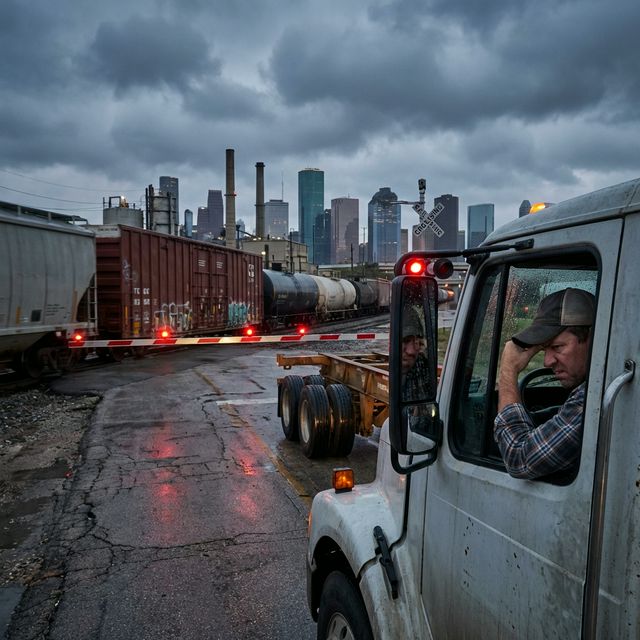
Your morning dispatch hits peak blockage blind.
Jennifer Lane sees 84 trains per day. Trentham Place: 70. Neither has gates. Between 6 AM and 10 AM, your 7 AM dispatch hits the exact moment when Union Pacific and BNSF are stacking cars. Your drivers are guessing which crossings are blocked.
Driver detention runs $50–75/hour. A 10-minute delay per truck = $8–12 per driver, per trip. Multiply that by your fleet size and dispatch frequency. One rerouted container before departure saves $150–350 in demurrage and detention charges.
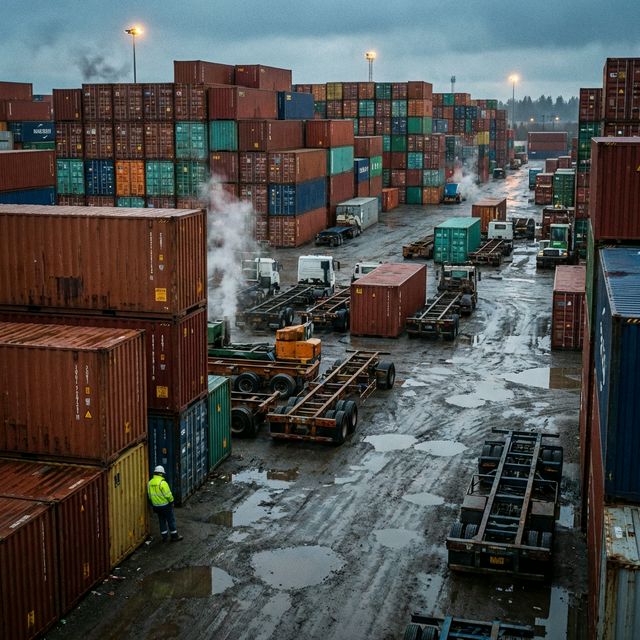
One blocked crossing cascades into thousands in losses.
A missed terminal appointment means rebooking fees. Late arrival at the rail ramp = demurrage: $150–350 per container, per day. Driver detention on a blocked crossing = $50–75 per hour. A single crossing blockage during peak hours cascades through your entire dispatch schedule.
If one blockage hits your 7 AM dispatch, you lose 5–10 containers worth of throughput that day. Port Houston is the #1 US port for foreign tonnage. Every container delayed is a slot you lose.
Predictive blockage intelligence for every crossing on your routes.

Real-time predictions for all 1,990 crossings. Check the crossing intelligence at 6:15 AM. If Jennifer Lane is blocked until 7:45 AM, hold departure by 15 minutes. Problem solved before the detention clock starts. Alternate routes mapped for every vulnerable crossing with expected time delta.
- 30-minute advance warnings before blockages occur
- Alternate routes for high-risk crossings (Jennifer Lane, Trentham Place, Market Street)
- Real-time alerts delivered to dispatch system via API or dashboard
- Peak window intelligence: Know when to schedule heavy dispatch (6–10 AM is blocked; shift to 5:30 AM or after 10:30 AM)
Jennifer Lane Crossing: Where predictions save thousands.
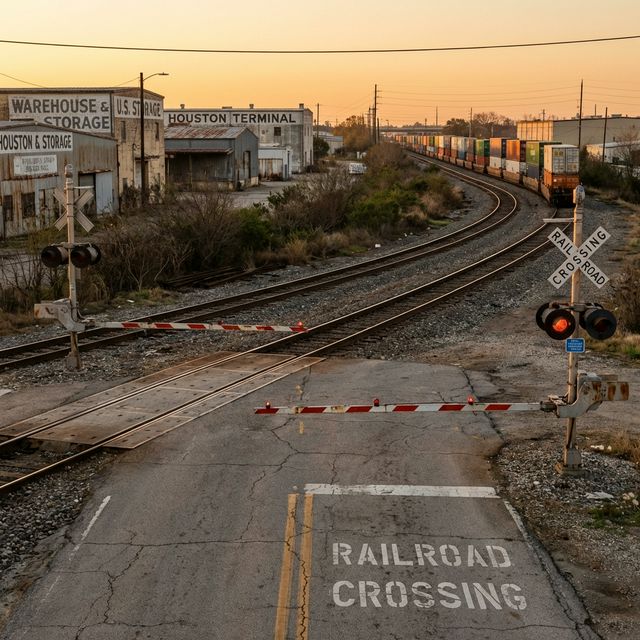
Jennifer Lane: The single most costly crossing in Houston.
84 trains per day. No automatic gates. Peak stacking: 6–10 AM. When Union Pacific and BNSF simultaneously schedule cars, this crossing is blocked 2–4 times per hour during peak window.
Cost of blockage: A single 15-minute detention for one truck = $12–18 in driver detention. Multiply by 5–10 trucks per blockage event, 2–4 times per hour, 6 hours per day = $720–$1,440 in lost productivity per day, per fleet. Terminal demurrage if containers miss the ramp = $150–350 per container.
With 30-minute advance warnings, dispatch shifts the 7 AM departure to 5:30 AM. Bypass the peak entirely. Jennifer Lane is clear. Containers arrive on time. Demurrage avoided. One shifted dispatch per week at Jennifer Lane = $1,000–$2,000 in savings.
From raw data to predictive intelligence in four layers.

Rail Network Ingestion
FRA crossing data, train schedules, 311 blockage reports, and real-time weather fused into one layer.

Predictive Modeling
MARC-MK correlates train schedules, blockage patterns, and weather to predict blockage windows 30 minutes ahead.
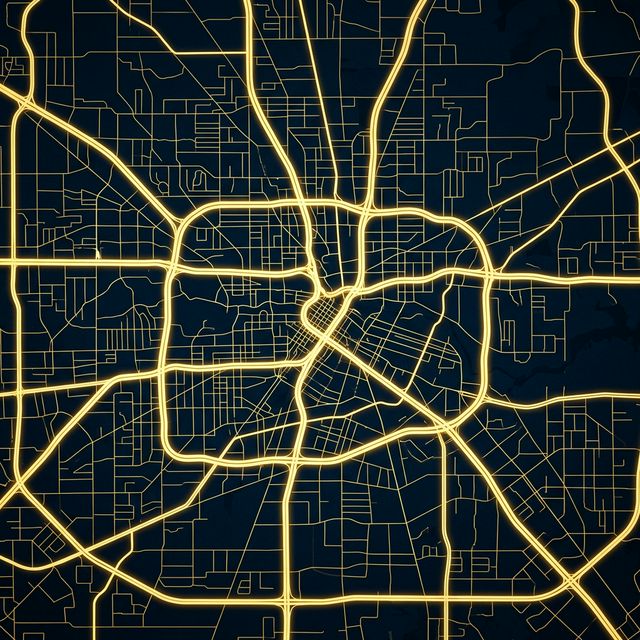
Route Intelligence
Your dispatch routes mapped against all 25 active corridors. Alternate routes scored for every vulnerable crossing.
Dispatch Alerts
Real-time blockage predictions, alternate routes, and time delta delivered to your dispatch system.
Built on production rail crossing data verified by FRA.
Built by operators, not consultants.
Navy Veteran Leadership
Founded by Robert Moeller, a Navy veteran with deep experience in federal procurement, AI/ML development, and operational intelligence. SDVOSB certified.
Production Data — Not a Prototype
The platform processes live FRA crossing data and rail network intelligence. Every prediction comes from verified crossing and train movement data across 25 active corridors.
Defense-Grade AI Platform
MARC-MK powers Satori Defense's federal programs including tactical training analytics for U.S. Customs and Border Protection. Rail crossing prediction is a natural extension.
We'll overlay your dispatch routes on our rail corridor map. 15 minutes. See every crossing your drivers hit.
Your operations aren't generic. You might run 7 primary routes through Port Houston, each hitting a different set of rail crossings. We'll load your routes into the live platform and show you blockage history, peak windows, and alternate route intelligence for every single crossing you use.
- Your specific dispatch routes mapped to all 1,990 crossings
- Blockage history and peak activity windows for your routes
- Alternate route recommendations with time delta
- 15 minutes — no slides, no pitch, just data
- Direct conversation with CEO Robert Moeller
We respond within 24 hours with a personalized demo showing your crossing intelligence.